European microphysiological systems (MPS) industry leaders, AlveoliX (Switzerland); BiomimX (Italy); chiron (Netherlands) Dynamic42 (Germany); InSphero (Switzerland); MIMETAS (Netherlands) NETRI (France), React4Life (Italy) and TissUse (Germany), are announcing today the creation of the Industry Alliance for Microphysiological Systems (IAMPS), the world’s first industry association dedicated to represent MPS providers.

European microphysiological systems (MPS) industry leaders, AlveoliX (Switzerland); BiomimX (Italy); chiron (Netherlands) Dynamic42 (Germany); InSphero (Switzerland); MIMETAS (Netherlands) NETRI (France), React4Life (Italy) and TissUse (Germany), are announcing today the creation of the Industry Alliance for Microphysiological Systems (IAMPS), the world’s first industry association dedicated to represent MPS providers.
The Strategic Committee for Health Industries and Technologies (CSF ITS) announces the publication of the 2025 White Paper of the French Organoids and Organs on Chips Sector (F3OCI), a reference document that provides the first overview of the French sector and proposes a national strategy to position France among the world leaders in these disruptive technologies.
Le Comité Stratégique de Filière Industries et Technologies de Santé (CSF ITS) annonce la publication du Livre blanc 2025 de la Filière Française des Organoïdes et Organes sur Puce (F3OCI), un document de référence qui dresse pour la première fois un panorama de la filière française et propose une stratégie nationale pour positionner la France parmi les leaders mondiaux de ces technologies de rupture.
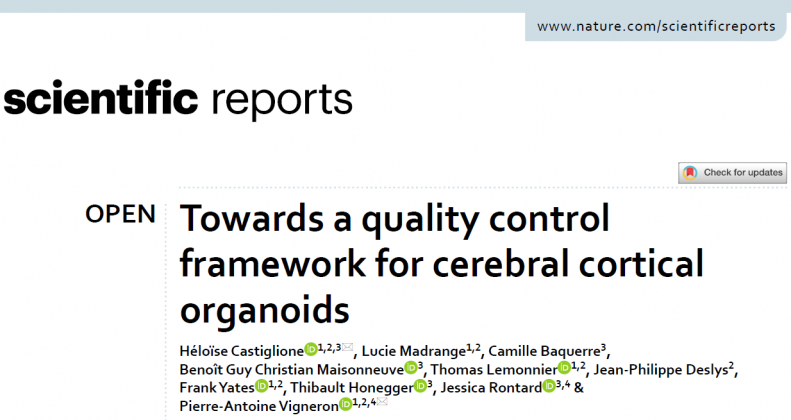
We are proud to share our latest scientific achievement, published in Nature Scientific Reports: “Towards a quality control framework for cerebral cortical organoids”. This work addresses one of the major challenges in the field of organoid research: ensuring reproducibility and reliability through a standardized quality control (QC) framework for cerebral cortical organoids.
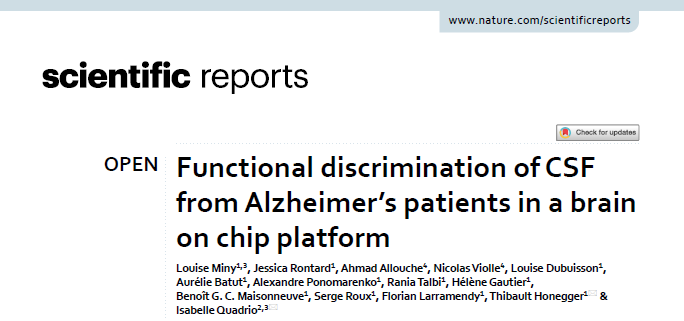
We are proud to share our latest scientific achievement, published in Nature Scientific Reports: “Functional discrimination of CSF from Alzheimer’s patients in a brain-on-chip platform” (read the article
). This work represents a major milestone for NETRI and our collaborators in advancing innovative technologies for the early diagnosis of neurodegenerative diseases.

NETRI, Techbio neuro-organs-on-chip start-up, announces the signature of a scientific collaboration agreement with French Agency for Food, Environmental and Occupational Health and Safety (Anses). The aim of this joint research project is to develop new methods for assessing the toxicity of pesticides on the human nervous system, without recourse to animal testing.
NETRI, start-up industrielle Techbio de neuro-organes-sur-puce annonce la signature d’un accord de collaboration scientifique avec l’Agence nationale de sécurité sanitaire de l’alimentation, de l’environnement et du travail (Anses). Ce projet de recherche commun vise au développement de nouvelles méthodes permettant l’évaluation de la toxicité des pesticides sur le système nerveux humain, sans recours aux tests sur animaux.