NEUROLOGICAL DISORDERS.
Description.
Create compartmentalized monoculture with healthy / C9orf72 or patient derived motor neurons to assess compound efficacy to regain motor neuron function.
Readouts.
• Electrophysiological recordings of motor neurons.
• Mediators release dosage (ELISA).
• Imaging.
Advantages.
• Direct recording enabling the discrimination of healthy vs ALS functional phenotype.
• Ability to detect compound concentration dependent effect on neuronal cell functionality.
• Access to ALS-patient-derived cells.
Description.
Innervate with glutamatergic neurons and record the response to compound of a Brain Organoid suspended in BioMimesys® brain hydroscaffol. Glutamatergic neurons provide a constant sensing recording baseline over time.
Readouts.
• MEA recordings.
• Digital Signatures.
• Imaging.
Advantages.
• Consistent innervation, potentially deeper that surface, providing better MEA signal than electrodes.
• Can be performed non-destructively over time.
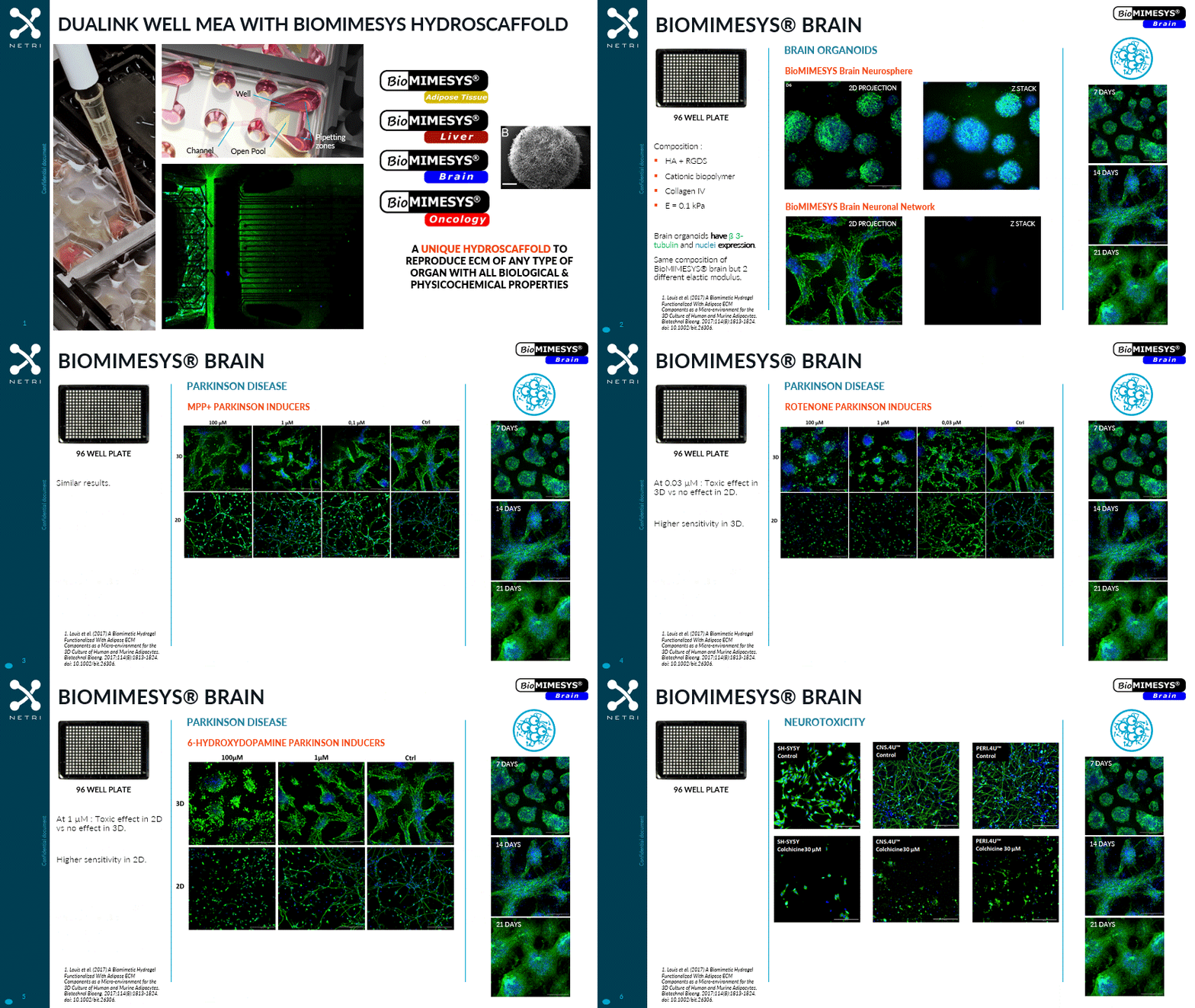
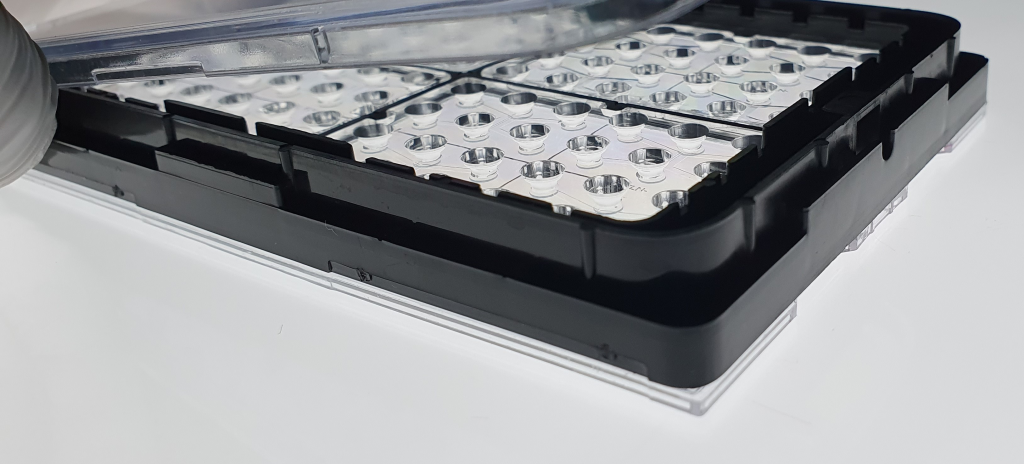
• Brain organoids can be consistently matured in NETRI’s DuaLink Well MEA devices.
Description.
Compartmentalized human iPSC-derived glutamatergic + GABAergic neurons co-cultured with astrocytes to model excitatory/inhibitory imbalance underlying seizures. Built on NETRI’s Neuron-as-a-Sensor (NaaS) technology to generate digital electrophysiological signatures predicting seizure liability.
Readouts.
• MEA electrophysiology (WMFR, bursts, synchrony, network activity).
• Dose-response profiling.
• Digital signature generation & ML-based clustering.
• Imaging for cell composition & QC validation.
Advantages.
• Human-relevant multi-cellular model.
• Real-time functional readout of network excitability.
• Early prediction of pro-convulsant risk.
• Scalable NAM approach.
POTENTIAL APPLICATIONS.
• Alzheimer’s Disease: co-culture of hiPSC-derived glutamatergic neurons with patient CSF.
• Parkinson’s Disease: co-culture of hiPSC-derived glutamatergic and dopaminergic neurons with misfolded protein oligomers in glutamatergic neurons compartment.
• Huntington’s Disease: co-culture of hiPSC-derived GABAergic neurons and medium spiny striatal neurons with Pridopidine in each compartments.
• BBB Penetration: tri-culture of hiPSC-derived glutamatergic neurons and pericytes / astrocytes and endothelial cells to create an innervated and vascularized BBB platform.
• Sensory Innervated NMJ: tri-culture of hiPSC-derived sensory neurons and primary muscle cells and hiPSC-derived motor neurons with compound in muscle and motor neurons compartments.
Initialization.
Creation of NaaS biology platform and NaaS Model for a target application.
• In Your Lab: Develop your NaaS Model on your own terms.
• At NETRI: Let NETRI Develop your NaaS Model.
Upscaling.
Build up of Digital NaaS model through Training Library of 100s of reference compounds.
• Pre-Licensing: Test your molecules using your NaaS Model.
Screening & Drug Design.
Transfer of methodology, devices and predictive model capabilities to client.
• Licensing: Screen your molecules using an existing NaaS Model.
Regulatory Approval.
Extension of approved NaaS Model to multiple clients. Larger deals with CROs to handle volumes.
• Licensing & milestones.