Co-culture & enhanced axonal projection rate With the DuaLink MEA microfluidic chip, the microchannels, NeoBento™ and MEA compatibility technologies are combined in a single microfluidic chip, to provide an unmatched user experience combined with an functional co-culture recording. Co-culture of different cell types and its functional activity recording Discontinuous connectivity by microchannels tunnels technology 3 compartments integrated on Axion Biosystems Maestro MEA technology: 2 for cell culture & 1 for fluidic isolation 16 microfluidic chips per NeoBento™ MEA with 672 electrodes (48 electrodes per chip) for Maestro Pro 8 microfluidic chips per NeoBento™ MEA with 336 electrodes (48 electrodes per chip) for Maestro Edge GET A QUOTE GET A SAMPLE READOUTS APPLICATIONS TECHNOLOGIES RESOURCES • Electrophysiology • Human cells • Rodent cells • Immunofluorescence • Live Dead Assays • Live staining • Liquid chromatography • Mass Spectoscopy • Lysis cells/supernatant analysis • ELISA • Calcium Imaging • Co-culture (neurons/skin cells, neurons/glial cells…) • Study of the functional activity of neurons • Analysis of the functional influence of a non-neuronal cell population on neurons • Drug screening • Quantitative assays • Axonal transport • Skin nociception • Itch • Ageing • Wound healing • Toxicology • Virology (viral transfection in one compartment only) • Neuroinflammation (Multiple sclerosis, Cerebral tumors…) • Innervated skin • Neuromuscular junction • Motor neuron diseases (Amyotrophic Lateral Sclerosis…) • Microchannels tunnels: Microchannels tunnels are rectangular slits engraved within microfluidic chips. Due to their micrometric measurements (3µm height, 5µm width), only cell extensions like for example neurites can grow within the microchannels, leaving the cell bodies within the compartments themselves. They allow also an enhanced fluidic isolation and discontinuous connectivity. • NeoBento™: The NeoBento™ format makes NETRI’s microfluidic devices as versatile and easy to handle as a typical 96-well plate, by being in the standard AINSI format. The NeoBento™ is compatible with routine control magnification imaging (x10, x20,…) and confocal or high magnification (x63 with water immersion) imaging. Its versatility allows users to perform High Throughput Screening, histochemical analysis and individual cell fixation. Finally, its compounds permit an optimized oxygenation without expensive equipment (pump or stirrer) and a controlled humidity of cell culture. • MEA Compatibility: Abiding by the 96-well microplate standard format, NeoBento™ MEA is a versatile container that enables electrophysiological recording of microfluidic experimentation while being compatible with standard equipment for liquid handling and imaging. DuaLink MEA allows to compare directly on the same chip the functional activity of 2 different neuronal types or the functional influence of a non-neuronal cell types on neurons. Publications Microchannel patterning strategies for in vitro structural connectivity modulation of neural networks Electrokinetic confinement of axonal growth for dynamically configurable neural networks Microfluidic neurite guidance to study structure-function relationships in topologically complex population-based neural networks Microfluidic Devices Protocols NeuroFluidics™ – DuaLink MEA Cells Types Protocols Sensory Neurons – Axol Bioscience Application Notes Evaluation of amyloid beta oligomers (AβO) effects on functional network integrity of rodent hippocampal neurons Posters Microfluidic high-throughput screening platform to screen pre-clinical stage compound effects on neurite outgrowth of human Motor Neurons post-injury Standardization criteria of hiPSC-derived neurons for Brain-on-Chip applications Modeling the human Brain-on-Chip with human iPSC-derived Glutamatergic neurons Standardization criteria of hiPSC-derived neurons for Brain-on-Chip applications

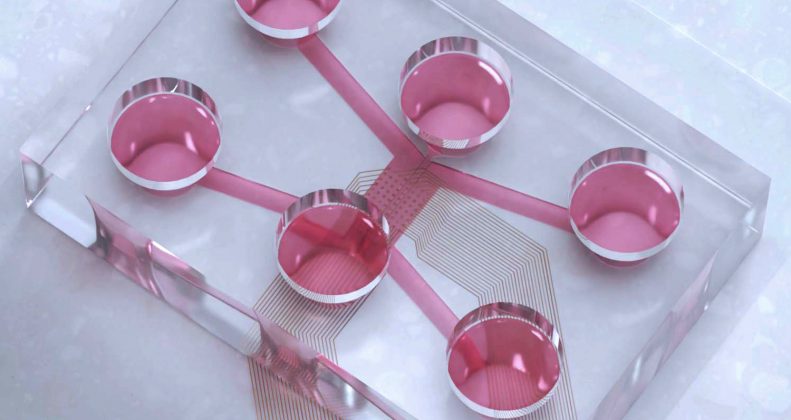
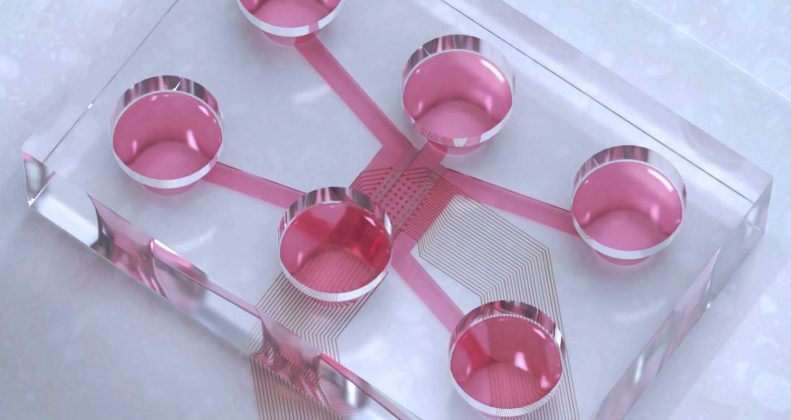
Functional tri-culture recording With the TriaLink™ MEA microfluidic chip, the microchannels, NeoBento™ and MEA compatibility technologies are combined in a single microfluidic chip, to provide an unmatched user experience combined with a discontinuous connectivity and neuronal functional analysis. Functional activity recording Tri-culture Discontinuous connectivity by microchannels tunnels technology 3 compartments crowded on MEA plat for independant 3 different cell type cultures 8 or 16 microfluidic chips per NeoBento™ GET A QUOTE GET A SAMPLE READOUTS APPLICATIONS TECHNOLOGIES RESOURCES • Electrophysiology • Human cells • Rodent cells • Immunofluorescence • Live Dead Assays • Live staining • Liquid chromatography • Mass Spectoscopy • Lysis cells/supernatant analysis • ELISA • Calcium Imaging • Culture up to 3 different cell populations (neurons/glial cells or neurons/skin cells…) • Study of the functional activity of neurons • Analysis of the functional influence of a non-neuronal cell population (astrocyte cells for example) on neurons • Cell migration/chemotaxis (microglia cells for example) • Stress effect on skin cells (ROS…) • Neuroinflammation (Multiple sclerosis, Cerebral tumors…) • Microchannels tunnels: Microchannels tunnels are rectangular slits engraved within microfluidic chips. Due to their micrometric measurements (3µm height, 5µm width), only cell extensions like for example neurites can grow within the microchannels, leaving the cell bodies within the compartments themselves. They allow also an enhanced fluidic isolation and discontinuous connectivity. • NeoBento™: The NeoBento™ format makes NETRI’s microfluidic devices as versatile and easy to handle as a typical 96-well plate, by being in the standard AINSI format. The NeoBento™ is compatible with routine control magnification imaging (x10, x20,…) and confocal or high magnification (x63 with water immersion) imaging. Its versatility allows users to perform High Throughput Screening, histochemical analysis and individual cell fixation. Finally, its compounds permit an optimized oxygenation without expensive equipment (pump or stirrer) and a controlled humidity of cell culture. • MEA Compatibility: The bounding of NETRI microfluidic chips on MEA plates allows functional analysis combine with structural analysis. DuaLink MEA allows to compare directly on the same chip the functional activity of 2 different neuronal types or the functional influence of a non-neuronal cell types on neurons. Publications Microchannel patterning strategies for in vitro structural connectivity modulation of neural networks Electrokinetic confinement of axonal growth for dynamically configurable neural networks Microfluidic neurite guidance to study structure-function relationships in topologically complex population-based neural networks Microfluidic Devices Protocols NeuroFluidics™ – TriaLink Cells Types Protocols Sensory Neurons – Axol Bioscience Application Notes Evaluation of amyloid beta oligomers (AβO) effects on functional network integrity of rodent hippocampal neurons Posters Microfluidic high-throughput screening platform to screen pre-clinical stage compound effects on neurite outgrowth of human Motor Neurons post-injury Standardization criteria of hiPSC-derived neurons for Brain-on-Chip applications Modeling the human Brain-on-Chip with human iPSC-derived Glutamatergic neurons Standardization criteria of hiPSC-derived neurons for Brain-on-Chip applications
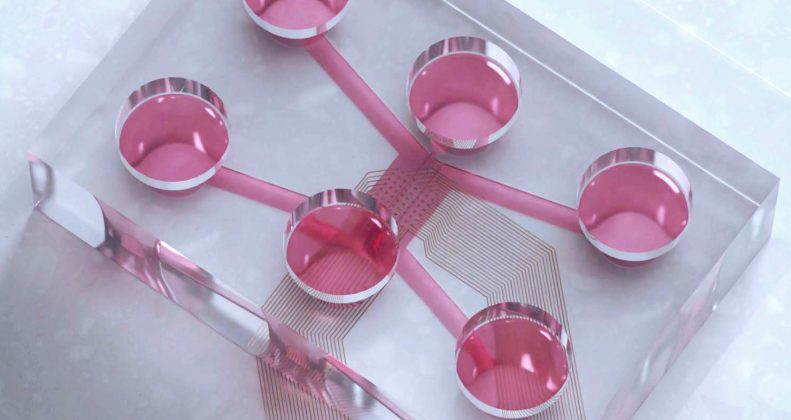
Functional synaptic recording With the DuaLink™ Shift MEA microfluidic chip, the microchannels, NeoBento™ and MEA compatibility technologies are combined in a single microfluidic chip, to provide an unmatched user experience combined with physiological synaptic compartmentalization and neuronal functional analysis. Functional synapse recording in the middle channel Asymmetrical shape with microchannels of different length (shorter length between the first and second channel than between the second and third channel) Discontinious connectivity 3 compartments crowded on MEA plate: 2 for cell culture & 1 for synaptic isolation 8 or 16 microfluidic chips per NeoBento™ GET A QUOTE GET A SAMPLE READOUTS APPLICATIONS TECHNOLOGIES RESOURCES • Electrophysiology • Human cells • Rodent cells • Immunofluorescence • Live Dead Assays • Live staining • Liquid chromatography • Mass Spectoscopy • Lysis cells/supernatant analysis • ELISA • Calcium Imaging • Analysis of the functional influence of a non-neuronal cell population on synapse • Synaptic compartmentalization (pre-, post- and synaptic compartments) • Synaptic transmission and localization • Axonal transport • Mitochondrial transport • Microglial cells migration • Culture up to 2 different cell populations • Neuroinflammation • Huntington’s disorders (cortico-striatal) • Study of the functional activity of neurons • Drug screening • Quantitative assays • Microchannels tunnels: Microchannels tunnels are rectangular slits engraved within microfluidic chips. Due to their micrometric measurements (3µm height, 5µm width), only cell extensions like for example neurites can grow within the microchannels, leaving the cell bodies within the compartments themselves. They allow also an enhanced fluidic isolation and discontinuous connectivity. • NeoBento™: The NeoBento™ format makes NETRI’s microfluidic devices as versatile and easy to handle as a typical 96-well plate, by being in the standard AINSI format. The NeoBento™ is compatible with routine control magnification imaging (x10, x20,…) and confocal or high magnification (x63 with water immersion) imaging. Its versatility allows users to perform High Throughput Screening, histochemical analysis and individual cell fixation. Finally, its compounds permit an optimized oxygenation without expensive equipment (pump or stirrer) and a controlled humidity of cell culture. • MEA Compatibility: The bounding of NETRI microfluidic chips on MEA plates allows functional analysis combine with structural analysis. DuaLink MEA allows to compare directly on the same chip the functional activity of 2 different neuronal types or the functional influence of a non-neuronal cell types on neurons. Publications Microchannel patterning strategies for in vitro structural connectivity modulation of neural networks Electrokinetic confinement of axonal growth for dynamically configurable neural networks Microfluidic neurite guidance to study structure-function relationships in topologically complex population-based neural networks Microfluidic Devices Protocols NeuroFluidics™ – DuaLink – DuaLink MEA Cells Types Protocols Sensory Neurons – Axol Bioscience Application Notes Evaluation of amyloid beta oligomers (AβO) effects on functional network integrity of rodent hippocampal neurons Posters Microfluidic high-throughput screening platform to screen pre-clinical stage compound effects on neurite outgrowth of human Motor Neurons post-injury Standardization criteria of hiPSC-derived neurons for Brain-on-Chip applications Modeling the human Brain-on-Chip with human iPSC-derived Glutamatergic neurons
Co-culture & enhanced axonal projection rate With the DuaLink MEA microfluidic chip, the microchannels, NeoBento™ and MEA compatibility technologies are combined in a single microfluidic chip, to provide an unmatched user experience combined with an functional co-culture recording. Co-culture of different cell types and its functional activity recording Discontinuous connectivity by microchannels tunnels technology 3 compartments crowded on MEA plate: 2 for cell culture & 1 for fluidic isolation 8 or 16 microfluidic chips per NeoBento™ GET A QUOTE GET A SAMPLE READOUTS APPLICATIONS TECHNOLOGIES RESOURCES • Electrophysiology • Human cells • Rodent cells • Immunofluorescence • Live Dead Assays • Live staining • Liquid chromatography • Mass Spectoscopy • Lysis cells/supernatant analysis • ELISA • Calcium Imaging • Co-culture (neurons/skin cells, neurons/glial cells…) • Study of the functional activity of neurons • Analysis of the functional influence of a non-neuronal cell population on neurons • Drug screening • Quantitative assays • Axonal transport • Skin nociception • Itch • Ageing • Wound healing • Toxicology • Virology (viral transfection in one compartment only) • Neuroinflammation (Multiple sclerosis, Cerebral tumors…) • Innervated skin • Neuromuscular junction • Motor neuron diseases (Amyotrophic Lateral Sclerosis…) • Microchannels tunnels: Microchannels tunnels are rectangular slits engraved within microfluidic chips. Due to their micrometric measurements (3µm height, 5µm width), only cell extensions like for example neurites can grow within the microchannels, leaving the cell bodies within the compartments themselves. They allow also an enhanced fluidic isolation and discontinuous connectivity. • NeoBento™: The NeoBento™ format makes NETRI’s microfluidic devices as versatile and easy to handle as a typical 96-well plate, by being in the standard AINSI format. The NeoBento™ is compatible with routine control magnification imaging (x10, x20,…) and confocal or high magnification (x63 with water immersion) imaging. Its versatility allows users to perform High Throughput Screening, histochemical analysis and individual cell fixation. Finally, its compounds permit an optimized oxygenation without expensive equipment (pump or stirrer) and a controlled humidity of cell culture. • MEA Compatibility: The bounding of NETRI microfluidic chips on MEA plates allows functional analysis combine with structural analysis. DuaLink MEA allows to compare directly on the same chip the functional activity of 2 different neuronal types or the functional influence of a non-neuronal cell types on neurons. Publications Microchannel patterning strategies for in vitro structural connectivity modulation of neural networks Electrokinetic confinement of axonal growth for dynamically configurable neural networks Microfluidic neurite guidance to study structure-function relationships in topologically complex population-based neural networks Microfluidic Devices Protocols NeuroFluidics™ – DuaLink MEA Cells Types Protocols Sensory Neurons – Axol Bioscience Application Notes Evaluation of amyloid beta oligomers (AβO) effects on functional network integrity of rodent hippocampal neurons Posters Microfluidic high-throughput screening platform to screen pre-clinical stage compound effects on neurite outgrowth of human Motor Neurons post-injury Standardization criteria of hiPSC-derived neurons for Brain-on-Chip applications Modeling the human Brain-on-Chip with human iPSC-derived Glutamatergic neurons Standardization criteria of hiPSC-derived neurons for Brain-on-Chip applications